Some local tourists have called for renewed interest and deeper engagement by Ghanaians with the Elmina Castle and surrounding heritage sites, saying such efforts would strengthen national history, identity and consciousness.
The Ghana News Agency (GNA) observed that although Elmina Castle continues to record high patronage, especially on weekends, most visitors are foreigners, a situation some local tourists believe should be addressed through deliberate strategies to promote domestic tourism.
Mr Nana Anamoah Amoasi, an indigene of Elmina, said that despite living close to the castle, it was his first time visiting the historic site, explaining that many residents assumed they already knew its history simply by proximity.
He told the GNA that although he had previously toured the Cape Coast Castle, visiting Elmina Castle reinforced the importance of experiencing such historical sites firsthand.
According to him, the entire Elmina township, including its churches and other historical landmarks, constituted a rich tourism destination that could be better promoted.
Mr Amoasi said while the presence of tourists brought pride to residents, more could be done to maximise the economic benefits of tourism for the local community. He suggested that cultural events such as the Edina Bakatue (Blonya) Festival could be better packaged to attract visitors and generate additional income.
Sharing similar sentiments, Mr Frank Annin, a tourist from Accra, emphasised the need for sustained and serious teaching of Ghana’s history, particularly to younger generations.
He said understanding how colonial powers dominated and enslaved Africans was essential to building a more informed and self-aware society.
Mr Annin noted that exploitation still existed in modern forms, adding that his experiences abroad revealed continued discrimination against Black people. He expressed concern that Ghanaians sometimes favoured foreigners over their compatriots, even within the country.
He called on parents and educators to encourage children to visit historical sites from an early age, saying such exposure would foster national consciousness and better planning for the country’s future.
Mr Annin described it as unfortunate that foreigners visited Ghana’s castles more frequently than local residents.
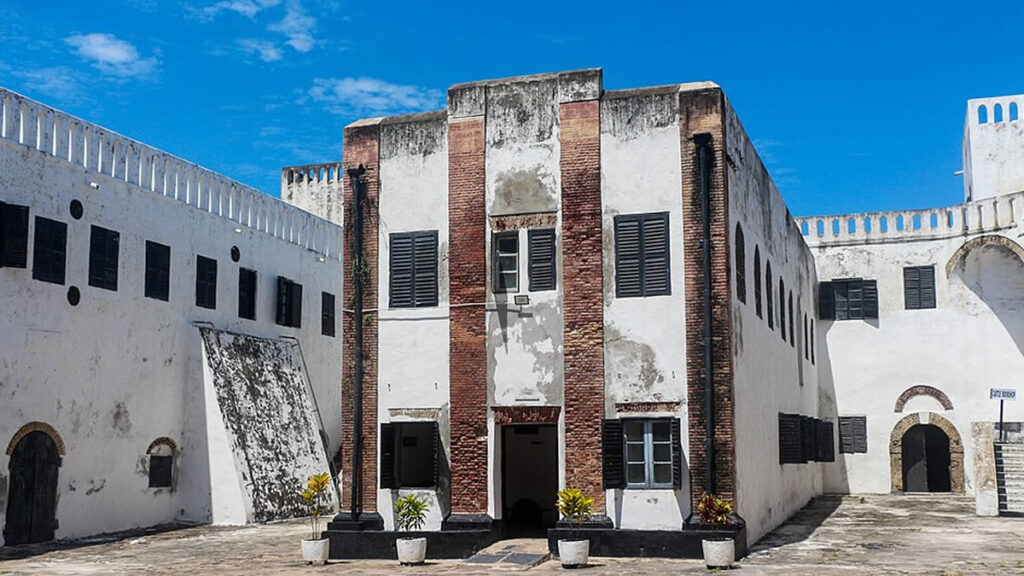
Providing historical context, Mr Kwamena Ammisah, a tour guide at Elmina Castle, said the structure was built by the Portuguese in 1482, following their arrival in the area in 1471.
He explained that the Dutch took control of the castle in 1637 with the support of some locals before it was later handed over to the British in 1872.
Mr Ammisah said Elmina Castle, now more than 500 years old, was the oldest and largest European structure in West Africa and played a central role in the Trans-Atlantic trade.
He said the Portuguese named the area “El Mina” due to the abundance of gold, although its original name was Anomansa.
Mr Ammisah also explained some architectural features of the castle, including the buttresses that strengthened its walls, and noted that the facility was used as a police training school in 1948 before such activities were relocated to Winneba.
He said the guided tours were aimed at educating visitors on the historical journey of both the castle and Elmina town, including areas such as the female quarters, to promote a deeper understanding of Ghana’s past.
Source: GNA
Related Posts