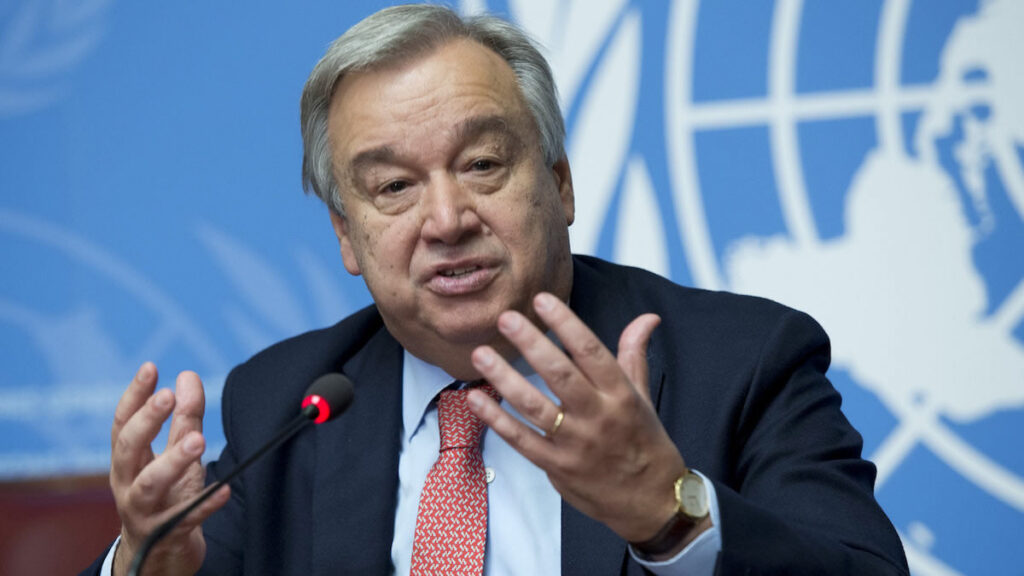
The Secretary-General of the United Nations, Antonio Guterres, has called for united global action to end contemporary forms of slavery, describing the horrors of the abolished transatlantic slave trade as both a Slavery is a horror from the history books and a relentless crisis in modern times.
He made the appeal as the world marked the International Day for the Abolition of Slavery on December 2, 2025, exactly a century after nations committed to ending slavery by adopting the Slavery Convention.
The Secretary-General highlighted the alarming scale of modern slavery, with an estimated 50 million people currently trapped worldwide, stripped of their rights, freedom, and human dignity.
He also paid tribute to the over 15 million African men, women, and children who were forcefully taken, shackled, sold into bondage across the ocean, or perished during the brutal transatlantic journey. Their suffering, he noted, left lasting scars that shaped structural inequalities and systemic injustices still seen today.
“On the International Day for the Abolition of Slavery, we remember past victims, especially the more than 15 million across Africa who were seized, shackled and sold into bondage an ocean away or perished en route. We recall the painful scars their enslavement left on our societies, including structural inequalities and systemic injustices that have persisted for generations,” he said.
According to UN assessments, contemporary slavery has surged by 233%, with women and children making up the majority of victims. The Secretary-General urged global stakeholders to act decisively to protect the millions currently suffering.
He reiterated concern over severe human rights violations such as forced labour, which affects 28 million people, and forced marriage, trapping an estimated 22 million.
“We rally to protect the estimated 50 million people now trapped in contemporary forms of slavery around the world, many of them women and children. And we reiterate our appeal to prevent human rights violations like forced labour and forced marriage from claiming more victims,” he stated.
He stressed that today’s forms of slavery are perpetuated by criminal networks exploiting people’s vulnerability, whether due to poverty, discrimination, environmental degradation, conflict, or the desperation that drives migration.
The Secretary-General concluded with a strong call to action, urging governments, institutions, civil society organisations, trade unions and businesses to unite against the crisis, ensuring justice, compensation, rehabilitation, restitution, and long-term protection for victims and their families.
Source: diplomatictimesonline.com
Related Posts