

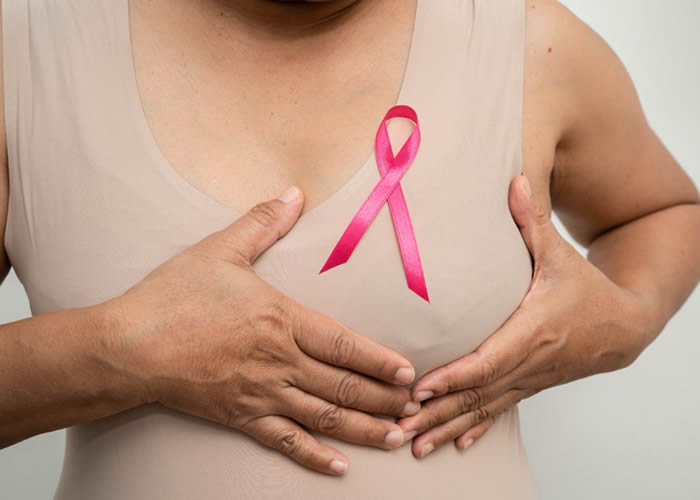
Every October, breast cancer campaigners repeat the same message: the disease is treatable when caught early, but fear, stigma and misinformation keep many women away from hospitals until it is too late.
More than 4,000 breast cancer cases are recorded in the country every year and the Chief Executive of Breast Care International (BCI), Dr Beatrice Wiafe Addai, says limited awareness and too few screening and treatment centres are driving the rise.
Breast cancer accounts for 31.8 per cent of all cancer cases in the country.
The death toll is heavy
The BCI says breast cancer has claimed at least 2,300 lives a year since 2020, out of about 5,000 diagnosed and that some 8,000 patients died between 2021 and 2024 after reporting to hospital late.
Dr Wiafe Addai, who also founded Peace and Love Hospitals, says most breast cancer patients in Ghana arrive with advanced disease.
Globally, the picture is similar.
The World Health Organisation (WHO) estimates that in 2022, about 2.3 million women were diagnosed with breast cancer and 670,000 died of it.
In high-income countries, 83 per cent of diagnosed women survive, while in low-income countries, more than half die.
The International Agency for Research on Cancer, part of the WHO, projects 3.2 million new cases and 1.1 million deaths a year by 2050 if current trends continue.
Myth: Breast size
Health experts say breast size does not cause breast cancer.
Having large breasts does not mean a woman will develop the disease, just as small breasts do not offer protection.
Breast cancer starts when cells in the breast grow abnormally.
Known risk factors include age, family history, inherited gene mutations such as BRCA1 and BRCA2, obesity, alcohol use and lack of physical activity.
Larger breasts contain more tissue, but this does not raise risk on its own.
Women of all breast sizes are urged to do regular self-examinations, attend screenings and report any changes promptly.
“It is spiritual”
The most damaging belief, campaigners say, is that breast cancer is caused by witchcraft or evil spirits.
Dr Wiafe Addai blames many deaths among Ghanaian women on this superstition and urges women to seek medical care when they notice anything unusual.
She has also told women that the claim that the disease can only be treated at prayer camps and shrines is false.
A related problem is herbal remedies. Dr Wiafe Addai says women often find a lump and go to a prayer group or herbalist rather than a hospital. She stresses that the Food and Drugs Authority 9FDA) has not licensed anyone to cure cancer with herbs.
“Sucking the breast lowers a woman’s risk”
Another claim that circulates on social media is that men who suck a woman’s breasts can reduce her chances of developing the disease. Health professionals say there is no evidence for it.
Dr Wiafe Addai said the claim was untrue and cautioned men to handle the breast with care rather than squeeze it.
A breast cancer campaigner, Dr Awura Adwoa Nunoo, said it has not been scientifically proven and urged the public to disregard such claims.
What does help is breastfeeding a baby.
Gifty Atampugbire of the University of Ghana Medical Centre says it is breastfeeding, not casual sucking, that reduces the risk.
“Once treated,it cannot return”
Many survivors believe that finishing treatment means the disease is gone for good.
In reality, breast cancer can come back, either in the same breast or elsewhere in the body, sometimes years later.
This is why doctors schedule follow-up appointments and regular check-ups after treatment and why survivors are urged to keep examining their breasts and report any change quickly. Early detection matters at every stage, not just the first.
“It is a women’s disease”
Breast cancer is far more common in women, but not exclusive to them.
WHO says 0.5 to one per cent of cases occur in men.
Dr Wiafe Addai puts the figure in Ghana at one to three per cent.
Dr Charles Arhinful of the VRA Hospital at Aboadze, says it is rare but has encouraged men to screen themselves.
“Only women with risk factors are in danger”
WHO says roughly half of all breast cancers occur in women with no known risk factor other than being female and getting older.
Dr Wiafe Addai’s advice is to keep a healthy weight, stay physically active and limit alcohol, while checking the breasts regularly.
The cost of silence
Stigma does not only delay diagnosis; it can break families.
The President of the Peace and Love Breast Cancer Survivors,Vivian Sarfo, has urge men not to desert wives who develop the disease but to support them through treatment.
Dr Wiafe Addai believes fear and stigma make many women reluctant to be tested until it is too late.
Treatment, however, works best early.
She says that when the disease is detected early, the tumour can be removed and the breast preserved.
Benedicta Agbono, a seven-year survivor, credits early detection with saving her life.
For campaigners, the message is simple: examine your breasts, report changes and go to a hospital, not a shrine.
Source: graphic.com.gh
Related Posts