On 21–22 July 2026, Ghana will host a landmark moment in Africa’s public health journey as leaders gather in Accra for the African Union Extraordinary Summit on Health. Convened under the theme”Advancing Justice, Equity and Universal Health Coverage: Ending AIDS, TB, improving maternal health, addressing endemic non-communicable and neglected tropical diseases and conditions in Africa“, the Summit seeks to accelerate action towards ending AIDS and tuberculosis by 2030, reducing preventable maternal deaths, addressing communicable and non-communicable diseases, and strengthening resilient health systems across the continent.
The United Nations warmly welcomes and fully supports this important African Union-led initiative. At a time when countries are navigating the combined pressures of economic uncertainty, climate shocks, emerging health threats and declining development financing, the Summit presents an opportunity to reaffirm the position that, beyond being a sectoral issue, health is the foundation of sustainable development, human dignity, economic prosperity and social justice.
Africa has made remarkable gains in recent decades. Millions more people today have access to life-saving HIV treatment; child mortality has declined significantly; and countries across the continent are investing in stronger health institutions. Yet the work remains unfinished. Persistent inequalities continue to leave too many women, children and vulnerable populations without access to quality healthcare. The Summit in Accra therefore comes at a critical moment, calling for bold leadership, renewed partnerships and sustainable investment in health systems.
The African Union’s ambition aligns closely with the United Nations’ vision embodied in the Sustainable Development Goals (SDGs), particularly SDG 3 on good health and well-being. The Summit’s focus on ending AIDS and TB, reducing maternal mortality, promoting universal health coverage and strengthening health security mirrors priorities that the UN system has championed across Africa and globally for decades. The United Nations stands ready to support Member States as they translate commitments into concrete action and measurable results.
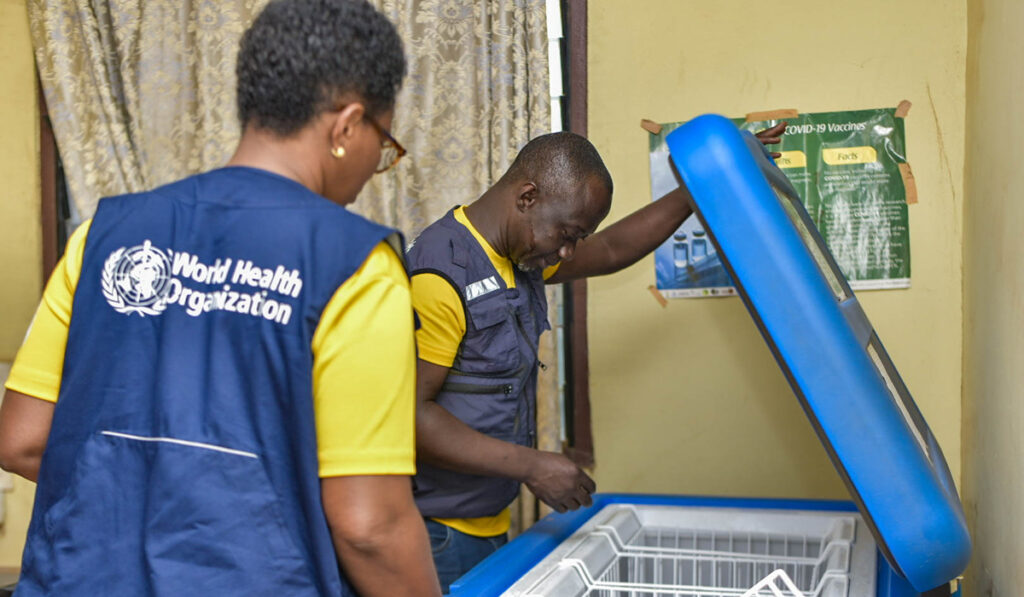
Ghana offers a compelling example of how national leadership, coupled with strong partnerships, can drive progress. Across the country, UN agencies are working alongside the Government of Ghana to strengthen health systems, expand access to services and improve health outcomes for communities. Through joint programmes led by agencies such as UNAIDS, UNFPA, UNICEF, WFP, WHO and others, the United Nations in Ghana continues to support the delivery of accessible, equitable and sustainable social services. For instance, in 2025 alone HIV/TB digital systems served approximately120,000 people, while viral load testing increased significantly. Some 1.8 million girls received HPV vaccination, protecting them against cervical cancer, and additional 1.8 million cholera and 33,000 Mpox vaccines were deployed.
Furthermore, in thecontext ofmaternal and reproductive health, the United Nations has supported efforts to expand access to reproductive health services and health education for adolescents and women, recognising that reducing preventable maternal deaths requires investments across the entire continuum of care. Today we have recorded a decline in maternal mortality from 310 deaths per 100,000 to 234. Joint programmes have also empowered adolescent girls through improved access to reproductive health information and rights-based services while also strengthening social protection and community resilience.
The Summit’s emphasis on equity also resonates strongly with UN efforts in Ghana to ensure that no one is left behind. Across underserved communities, the UN supports interventions that connect health with nutrition, education, climate resilience, social protection and livelihoods. This integrated approach recognises that health outcomes are shaped far beyond the walls of clinics and hospitals. Poverty reduction, food security, gender equality and environmental sustainability are all essential ingredients for healthier societies.
Equally important is Ghana’s growing leadership in conversations on health sovereignty and sustainable financing. Recent national discussions around strengthening domestic health financing, expanding health infrastructure, investing in primary healthcare and boosting local manufacturing under the Accra Reset Initiative, have contributed to broader continental debates about how Africa can build more self-reliant and resilient health systems. These ambitions are consistent with the African Union’s call for greater ownership of the continent’s health future.
The United Nations also recognises that health challenges do not stop at national borders. Disease outbreaks, pandemics, antimicrobial resistance and the health impacts of climate change require coordinated regional responses. This is why partnerships between the African Union, Member States, regional institutions and the UN system are more important than ever. During the Summit, senior leaders from across the United Nations family—including UNAIDS, WHO and UNFPA—will engage in Accra to strengthen cooperation in support of Africa’s health agenda.
As delegates gather in Accra, and beyond the adoption of declarations, the true measure of success will be whether commitments lead to tangible improvements in people’s lives: mothers surviving childbirth, children receiving life-saving vaccinations, young people accessing quality health services, communities protected from disease outbreaks, and health systems capable of serving all, regardless of income, gender or geography.
The United Nations stands shoulder to shoulder with the African Union, the Government of Ghana and all Member States in advancing this vision. Through its 34 entities working in Ghana and through its cooperation with national institutions, civil society, development partners and communities, the UN remains committed to supporting stronger health systems, greater equity and accelerated progress towards the SDGs.
A healthier Africa is possible. The Accra Summit provides an opportunity to turn aspiration into action and commitments into lasting change. Let Accra be remembered as the host city of an important summit, and more importantly as the place where Africa and its partners renewed their determination to ensure health, dignity and opportunity for every person, everywhere.
By United Nations in Ghana
Related Posts