

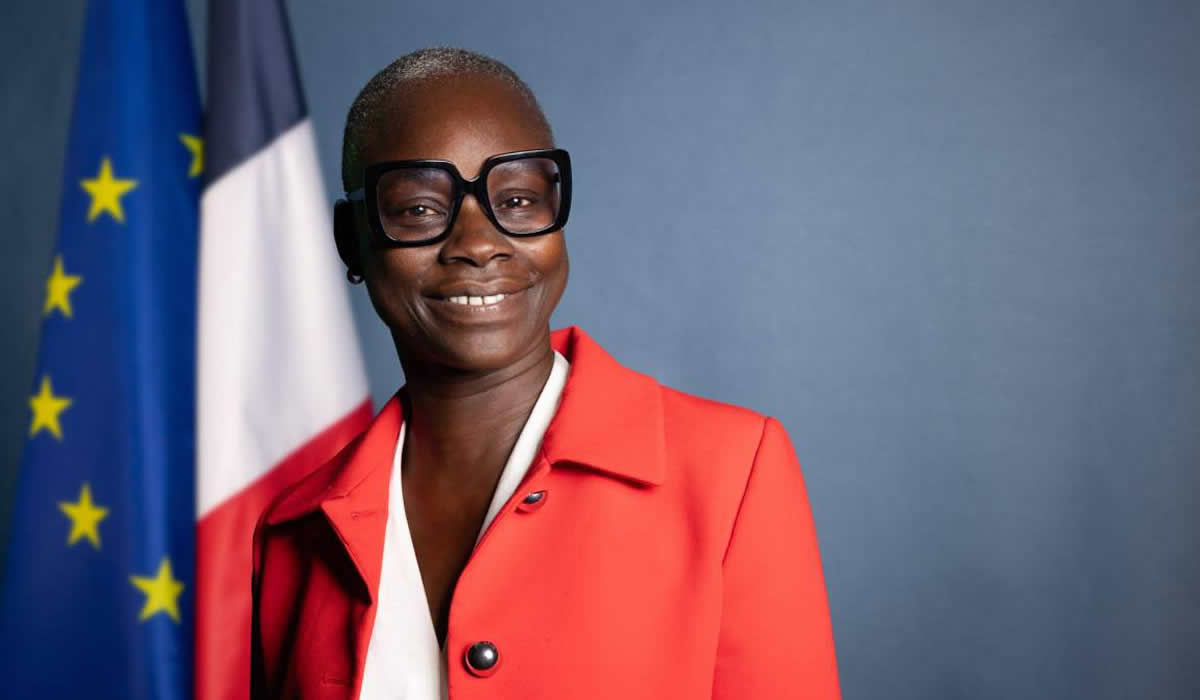
French Ambassador to Ghana Diarra Dimé-Labille has reaffirmed France’s commitment to reparatory justice, noting that the country remains open to dialogue in good faith and has made concrete commitments that will guide its actions in the future.
She underscored that France’s approach reflects a willingness to engage with Ghana on historical injustices and to explore practical ways of addressing their lasting consequences.
Speaking at a French and Business Communities’ cocktail reception in Accra, Ambassador Labille reaffirmed Paris’ willingness to dialogue and concrete commitment on the issues of reparatory justice.
“On the broad topic of restorative justice, which Ghana has championed at the international level, France is open to a dialogue in good faith and has made concrete commitments that will guide its actions in the future,” she stated.
Her remarks come against the backdrop of President Emmanuel Macron’s recent statements on France’s approach to historical justice and its relations with countries of the Global South.
Addressing the 81st United Nations General Assembly in September 2026, Macron noted that France was continuing its work with Ghana and other willing partners to respond to calls for reparatory justice.
He linked the issue to France’s broader efforts on historical memory, cultural relations and the restitution of African cultural property, describing reparatory justice as a matter of respect and saying respect should form part of the basis for a renewed relationship between the Global North and Global South.
France’s engagement with the reparatory-justice debate is closely connected to its own historical involvement in the transatlantic slave trade and the system of colonial slavery.
French merchants, shipowners and ports played a significant role in the trafficking of enslaved Africans to French colonies in the Americas. Nantes became France’s principal slave-trading port, with about 1,800 expeditions departing between 1700 and 1830 and deporting an estimated 400,000 enslaved people to French colonies.
The French monarchy authorised, encouraged and financed the trade, while the wealth generated from enslaved labour and plantation commodities contributed to the development of major French commercial centres.
The legacy of that history has increasingly featured in international discussions on historical justice and reparations, particularly following a landmark United Nations General Assembly resolution spearheaded by Ghana.
On March 25, 2026, the UN General Assembly adopted Resolution 80/250, recognising the trafficking of enslaved Africans and the system of racialised chattel enslavement of Africans as “the gravest crime against humanity.” The resolution received 123 votes in favour, while Argentina, Israel and the United States voted against it and 52 countries abstained.
Macron had earlier, in May 2026, announced that France would participate in the follow-up to the UN General Assembly resolution on reparations at Ghana’s invitation. He also said France and Ghana had agreed to launch an international scientific process with a Franco-Ghanaian focus to establish historical evidence and make concrete recommendations to policymakers.
France has also taken a number of measures concerning the legacy of slavery and colonialism. In 2001, the country formally recognised the transatlantic slave trade and slavery as crimes against humanity through the Taubira Law.
More recently, France has moved to formally repeal the Code Noir, the 1685 legal framework that regulated slavery in French colonies. The French National Assembly adopted a bill repealing the Code Noir in May 2026, although the legislative process was not yet complete as of October 2026.
France has also pursued the restitution of African cultural property held in the country. In 2021, it transferred ownership of 26 works from the royal treasures of Abomey to Benin and returned the sword and scabbard associated with El Hadj Omar Tall to Senegal. The French presidency has described these restitutions as part of a broader effort to reshape France’s cultural relationship with Africa.
The issue of reparatory justice has gained greater international attention following Ghana’s advocacy for discussions on the historical consequences of slavery and the transatlantic slave trade. Ghana has positioned the issue within a wider call for dialogue, historical recognition and measures to address the continuing effects of the slave trade.
Macron’s comments at the UN General Assembly therefore marked a continuation of the position he had outlined earlier in the year, with Ghana specifically identified as one of France’s partners in the ongoing work on reparatory justice.
For Ghana and France, the emerging engagement places historical memory alongside broader diplomatic and development cooperation, with both sides indicating an interest in addressing difficult aspects of their shared history through dialogue, research and practical initiatives.
Source: Diplomatic Times
Related Posts