

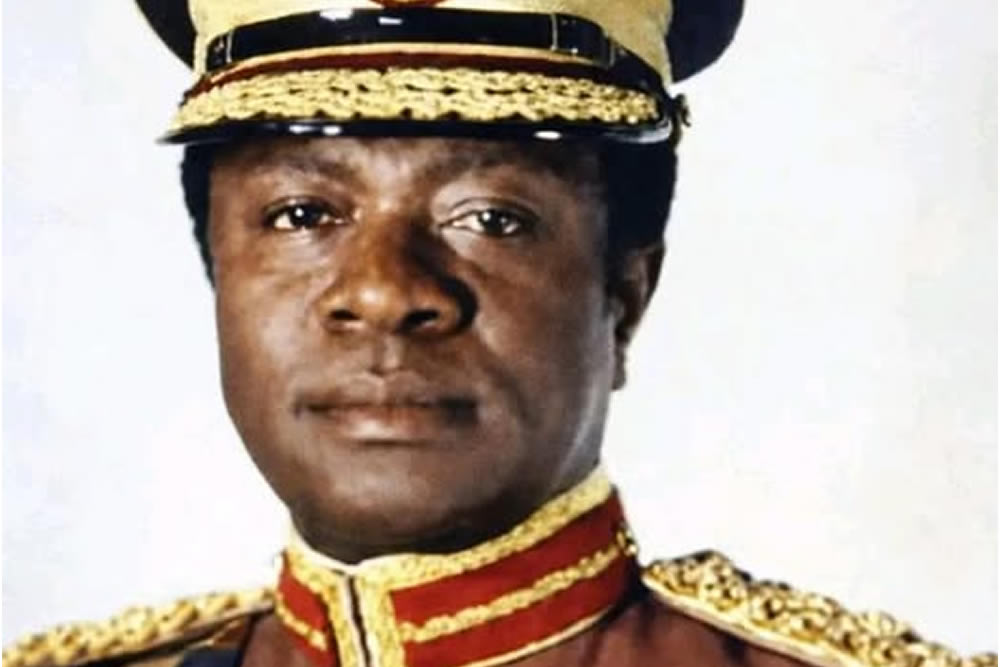
The author of The Life and Times of General Kutu Acheampong, Professor Baffour Agyeman-Duah, has pushed back at critics who say the late Head of State should not be celebrated, arguing that Ghana’s history cannot leave him out even though he took power by force.
Prof. Agyeman-Duah was speaking on Channel One TV on Wednesday, November 18, 2026. He was answering UPSA Senior Lecturer Dr James Kwabena Bomfeh, popularly known as Kabila, who has questioned efforts to praise Acheampong’s achievements without dealing with the damage the 1972 coup did.
The professor said he respects Dr Bomfeh’s points but disagrees that the coup should cancel out everything else about Acheampong’s time in office.
“Yes, Acheampong wasn’t an angel, and I say that clearly in the book. He wasn’t an angel,” he said.
“But whilst we acknowledge that there were certain aberrations, especially carrying out a coup d’état, which is not approved and is not being celebrated, I think every leader deserves his place in history,” he added.
He insisted the book is not meant to glorify coups or polish Acheampong’s image.
“I wasn’t interested in glorifying coup d’états. I wasn’t interested in just simply revising history to uplift the General. These are hard facts about a part of our history that almost got lost,” he said.
He explained that under former President Jerry John Rawlings, public discussion of Acheampong, and of the other officers executed with him, was largely suppressed.
On the constitutional argument, Prof. Agyeman-Duah said Article 3 of the 1992 Constitution, which condemns unconstitutional changes of government, was written in light of Ghana’s repeated coups.
“Article 3 came after the fact. It came after a series of coup d’états, and it was the previous coup d’états that informed Ghanaians of a new consciousness that, in fact, coups are an aberration,” he said.
He stressed that he does not support military takeovers and that Ghanaians have consistently backed democratic rule, though he conceded that recent surveys point to some change in public attitudes.
He also defended Acheampong’s development record, especially Operation Feed Yourself, which he said grew out of work started under the previous Busia administration.
“The Busia government already had plans, and they had imported certain equipment to undertake massive agricultural projects. But other leaders came into power and disregarded what the previous had done. But this guy picked it up and enhanced it and became successful,” he said.
Governance, Prof. Agyeman-Duah added, is a continuous process, and the origins of policies should not be forgotten when judging what each administration achieved.
Source: adomonline.com
Related Posts