

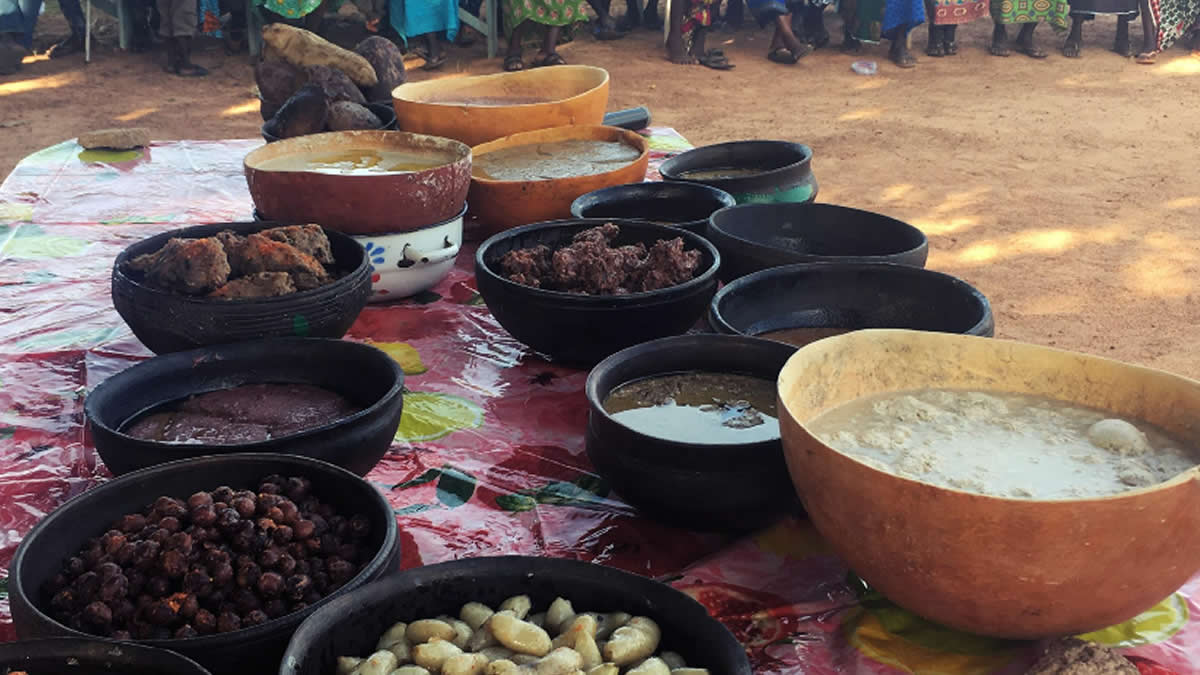
In Ghana and across the African continent, food remains one of the most enduring cultural expressions that define people, places, identity, and histories.
Dishes are not merely meals served for nourishment, but embodiments of culture that distinguish continents, nations and communities.
Each dish carries meaning, representing the traditions, values and life experiences of people within a specific cultural setting.
In Ghana, the diversity of cuisines reflects the country’s rich cultural mosaic – from Tuo Zaafi (TZ) in Northern Ghana to Akple among the Ewe, Fufu among the Akans and Kenkey among the Ga people. Food continues to serve as a unifying, yet distinct cultural symbol.
While some of these dishes have assumed national appeal, others remain closely tied to specific ethnic identities.
In the Upper West Region, for instance, the Dagara culinary tradition boasts of a variety of indigenous meals such as TZ, “sense” made from beans or Bambara beans, “kpoglo” made from fried maize flour and Bambara beans TZ, known as “simisao”, among others.
Among these, simisao, once largely confined to Jirapa and its surrounding communities, is gradually gaining wider acceptance across the region, reflecting the evolving yet resilient nature of indigenous food systems.
What is Simisao?
Simisao is an indigenous delicacy among the Dagaba people. It is prepared from Bambara beans flour in the resemblance of TZ, but softer and served hot, earning the accolade “gyir booduba”, to wit, “hang towel” to clean the sweat while you eat it.
Simisao is served with dried okra soup with dried meat, preferably a “bush meat”, though it can also be served with other types of meat.
It is prepared both at home for household consumption and at local eateries for commercial purposes.
Mr Peter Buoso, the Manager of EOF, a popular Simisao joint in Wa, told the Ghana News Agency (GNA) in an interview that Simisao is preferred in the morning due to its ability to sustain a person throughout the day.
He said: “Simisao is mostly eaten in the morning, though it can also be eaten in the evening. Most people prefer to eat it in the morning because when you eat it, all you need is water, and it can sustain you for the whole day, so people eat it before going to work.
“A lot of people also like to eat Simisao because of its nutrients. You know, it is prepared with pure local ingredients like dawadawa, no spices like magi, so it’s natural with natural taste.”
Mr Buoso indicated that he had been in the Simisao business for over a decade now, and it had a high patronage, “because a lot of people have come to like it.”
During a visit to the EOF eatery, the GNA witnessed what could be described as a “competition for the Simisao.”
Lovers of the delicacy, predominantly men, both elderly and young, were seen grinding pepper, while others could not wait, but washed their own bowls to be served.
Some lovers of Simisao told the GNA that they were nurtured with Simisao, and it was a part of their traditional food, while others said they did not know Simisao but learned to eat it later through their peers.
Mr Desmond Bayor, from Nandom, said he had become fond of Simisao due to its ability to sustain him throughout the day.
For Mr Raymond Dabuo, from Jirapa, Simisao is a traditional meal in that area, which had been consumed “right from birth.”
Others also praised the nutritional value of Simisao, which they said enticed them into eating it almost every day.
Nutritional value of Simisao
Research indicates that Bambara beans promote digestive health due to the fibre in them, which maintains bowel regularity, prevents constipation, and reduces the risk of digestive disorders such as diverticulosis.
The fibre content is said to also increase the feeling of fullness and energy levels as well as regulate blood sugar levels, provide the body with iron, necessary for producing red blood cells, prevent anaemia, boost the immune system and enhance cognitive function.
The protein content of Bambara beans supports muscle repair and growth, enhances metabolic functions, hormonal production, and improves immune defence, among others.
One could, therefore, guess the nutritional value of Simisao with the combination of the rich nutritional power Of Bambara beans and that of the soup made of dry meat, dried okra, dawadawa and shea butter, among other indigenous ingredients.
Promoting traditional cuisine
Mr Kwesi Anim-Larbi, the Upper West Regional Director of the Ghana Tourism Authority (GTA), described indigenous cuisine, including Simisao as a critical component of tourism development.
He emphasised the need to reposition local cuisine as a cultural and tourism asset saying, “Our food is our signature, our pride and our living heritage.”
This repositioning could be achieved by including indigenous dishes such as Simisao on the menus of restaurants, especially for conferences, workshops and meetings to attract people from different cultural settings to these dishes.
With the advent of social media, these traditional cuisines, the cultural pride and heritage of the Upper West Region could also be promoted and marketed through creative content for social media such as TikTok, Facebook and YouTube.
Preserving traditional cuisine
The cultural, tourism, and nutritional relevance of Ghana’s traditional dishes, particularly of the Upper West region, has made it imperative to preserve them.
It had become even more imperative to preserve indigenous foods because they had long been undervalued, despite their ability to sustain generations and contribute to nurturing healthier lives and the environment.
Therefore, as part of efforts to promote and preserve the rich culinary traditions of the Upper West Region, the Upper West Regional Coordinating Council, in collaboration with the Centre for Indigenous Knowledge and Organisational Development (CIKOD), organised an indigenous food festival to mark the Ghana Month.
The food celebration, on the theme: “Upper West Pot: Our Deepest Pride, Our Greatest Heritage”, sought to promote indigenous cuisine as a pathway to identity, pride and development.
The event witnessed the exhibition of indigenous foods in the region, including TZ with “jojo” and “green green”, Simisao, tumpane and kose, as well as traditional drinks such as Pito, zonkuo and sobolo, among others, were integral to the region’s heritage.
Mr Daniel Banuoku, the Executive Director of CIKOD, emphasised that preserving and promoting the indigenous dishes meant decolonising African food systems.
He observed that colonial legacies had portrayed local diets as inferior and undervalued, despite their proven nutritional and environmental benefits.
He highlighted crops such as millet, sorghum, cowpea, shea butter, baobab and dawadawa as central to sustainable food systems.
“Decolonising the African food means restoring confidence in what we grow, what we cook, and what we eat,” Mr Banuoku explained.
He, therefore, advocated the institutionalisation of the Upper West food exhibition as an annual event to promote indigenous foods and strengthen cultural identity.
Pognaa Fati Issaka Koray, the Upper West Regional Coordinating Director, highlighted the economic potential of indigenous foods, noting that they could create employment, empower women, support local agriculture and drive tourism.
She encouraged members of the public, particularly the youth, to embrace and promote their cultural heritage, including their indigenous foods saying, “What we eat at home can become a global attraction.”
Madam Maria Johana Yuorpor, a food entrepreneur and Chief Executive Officer of Mara Foods, advocated increased consumption of indigenous meals, describing them as nutritious and essential for healthy living.
She encouraged households to incorporate traditional dishes into their diets to help sustain traditional knowledge of those dishes and improve public health.
As Ghana marks Heritage Month, the centrality of food in cultural identity and development cannot be overemphasised, highlighting the need to preserve and promote indigenous cuisine in the face of modernisation.
By Philip Tengzu
Source: GNA
Related Posts