Kemi Badenoch asserts UK shouldn’t pay slave trade reparations
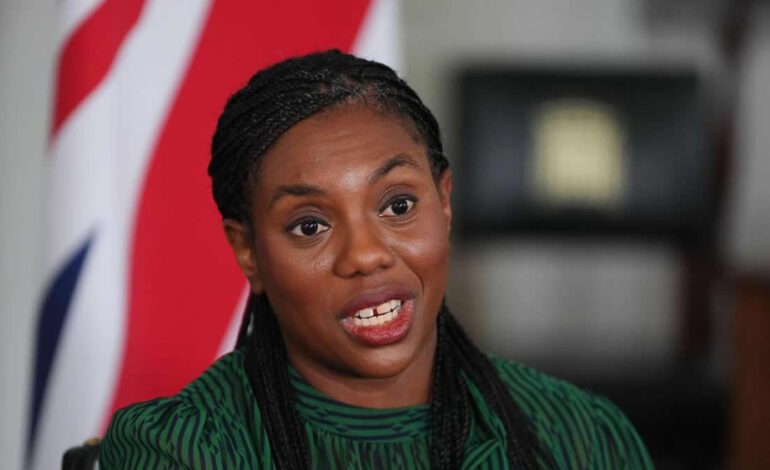
The leader of the Conservative Party in the United Kingdom, Kemi Badenoch, has strongly opposed a recent United Nations resolution on the Transatlantic Slave Trade that calls for reparations, arguing that Britain played a key role in ending the trade and should not be held financially responsible.
Her comments reflect a broader scepticism within parts of British politics about how reparatory justice should be pursued.
In a post on X, Badenoch framed the resolution gaining the votes of adversarial countries Russia, China and Iran who expected the UK, a former colonial power, to pay “trillions in reparations” to African states and people of African descent.
She criticised the decision by the United Kingdom’s representative at the United Nations to abstain from the vote, asserting it reflected “ignorance… or cowardice” on the part of the representative of Prime Minister Keir Starmer.
The UK and all members of the European Union abstained, describing aspects of the resolution as problematic, even as the resolution secured 123 votes in favour with only three countries voting against.
“Russia, China and Iran vote with others to demand trillions in reparations from UK taxpayers … and the Labour government abstain! Britain led the fight to end slavery. Why didn’t Starmer’s representative vote against this? Ignorance… or cowardice? We shouldn’t be paying for a crime we helped eradicate and still fight today.” Badenoch wrote.
Russia, China and Iran vote with others to demand trillions in reparations from UK taxpayers…and the Labour government abstain!
— Kemi Badenoch (@KemiBadenoch) March 26, 2026
Britain led the fight to end slavery.
Why didn’t Starmer’s representative vote against this? Ignorance…or cowardice?
We shouldn’t be paying for a… https://t.co/nWlzBxhb5w
Her stance mirrors a broader position within the UK’s Conservative leadership that emphasises Britain’s historic role in abolishing the slave trade and rejecting what she views as legally or financially punitive measures against modern taxpayers, rather than supporting broad reparatory claims.
The recent United Nations resolution, adopted on 25 March 2026, recognises the Transatlantic Slave Trade and the racialised chattel enslavement of Africans as the “gravest crime against humanity” and urges member states to pursue reparatory measures, despite being non-binding under international law.
African nations and Caribbean states have long advocated for reparatory justice. Initiatives such as the Accra Reparations Conference and the Pan-African Congress on Reparations have advanced calls for compensation and restoration that acknowledge both historical harms and their ongoing effects on descendants of enslaved people. These efforts emphasise that reparations are not merely retrospective financial payments but part of broader restorative justice addressing systemic inequities.
The Transatlantic Slave Trade was a system of forced migration and enslavement that lasted from roughly the 16th to the 19th century, during which European powers transported millions of Africans to the Americas. Estimates suggest that around 12.5 million Africans were deported across the Atlantic, with countless losses and generational suffering.
The trade profoundly shaped global economic and social systems, embedding inequality, racial hierarchies, and persistent structural disparities that many scholars and advocates link to present-day injustice. Reparations movements call for a range of responses, including formal apologies, restitution of cultural artifacts, financial compensation, educational investment, and institutional reform to address this enduring legacy.
Source: Diplomatic Times
Related Posts