
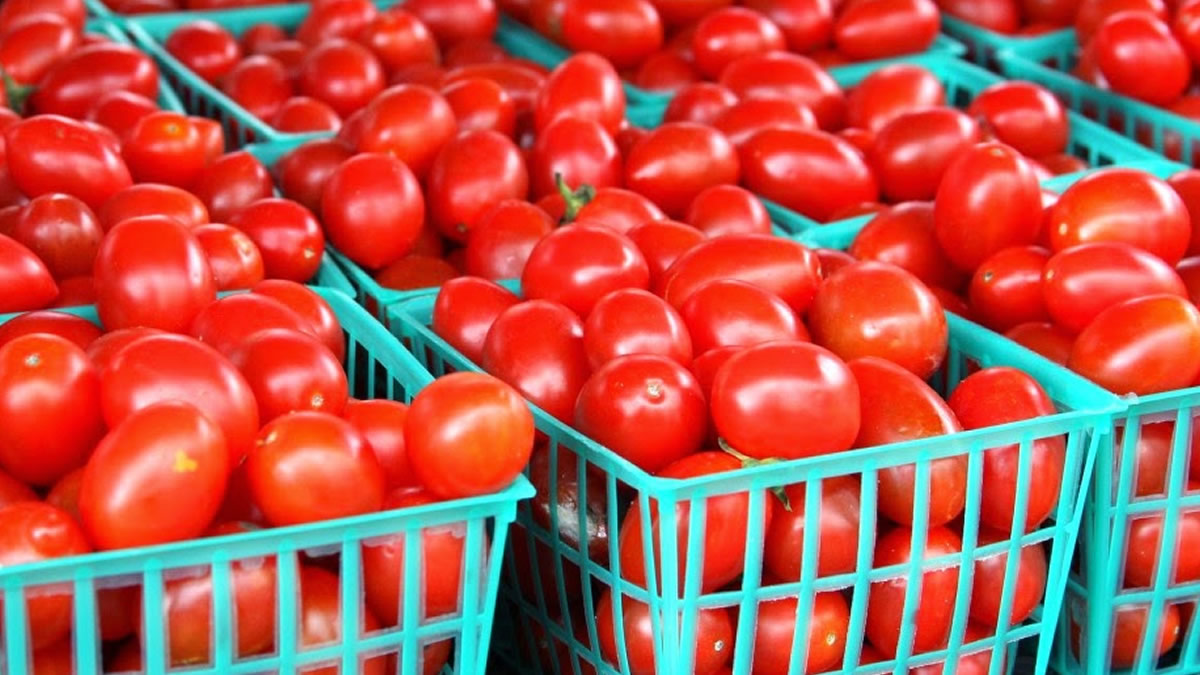
Burkina Faso has suspended all fresh tomato exports across its territory with immediate effect, as the military-led government moves to protect domestic processing units from supply shortages.
The ban, announced in a joint communiqué dated March 16, 2026, was signed by the Minister of Industry, Commerce and Artisanat, Serge Gnaniodem Poda, and the Minister of State for Agriculture, Water, Animal and Fisheries Resources, Commandant Ismaël Sombie.
The directive applies to the entire national territory “until further notice,” the communiqué states, and covers all economic operators involved in fresh tomato exportation.
“The exportation of fresh tomatoes is suspended across the entire national territory until further notice,” the joint communiqué reads, citing the need to ensure adequate supply to national processing units.
The issuance of Special Export Authorisations, known by their French acronym ASE, has also been suspended with immediate effect.
Operators who already hold valid tomato export authorisations have been given a two-week window from the date of the communiqué to complete any pending export procedures.
After that deadline, all existing authorisations will be considered null and void.
The government warned that any violation of the directive will attract sanctions in accordance with existing regulations. Any goods seized for breaching the ban will be handed over, free of charge, to industrial tomato processing units established under the country’s popular shareholding framework.
Burkina Faso has in recent years been pushing to develop its agro-processing sector as part of broader efforts to reduce dependence on raw commodity exports a policy direction that has become more pronounced under the transitional military administration led by Captain Ibrahim Traoré.
The ban is likely to have ripple effects on cross-border tomato trade in the sub-region, including in Ghana, which shares economic and agricultural trade links with Burkina Faso.
Northern Ghana, in particular, relies on cross-border produce flows, and any tightening of supply from Burkina Faso could affect local market prices.
The government said it is counting on the cooperation of all actors in the tomato value chain, as well as border control services and security forces, to ensure full compliance with the directive.
Source: myjoyonline.com
Related Posts