
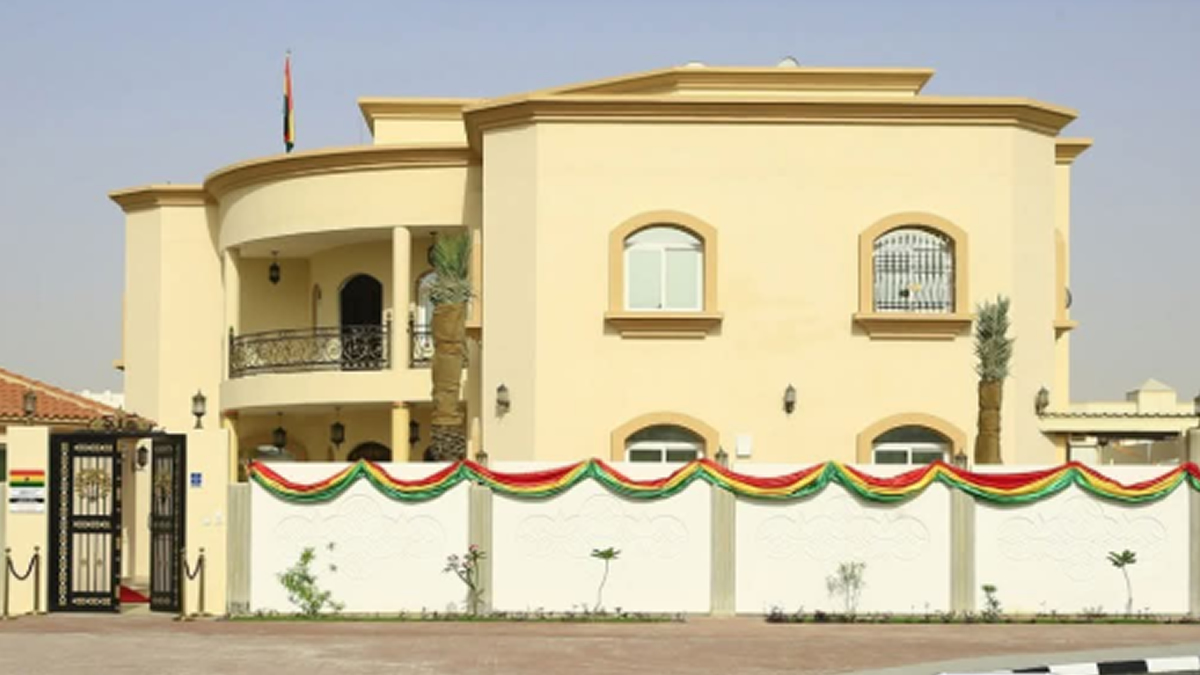
The Embassy of Ghana in Qatar has directed Ghanaian nationals living in Doha to submit the biodata pages of their passports by Tuesday, 17 March 2026, as part of preparations for an optional evacuation from the country.
The directive follows an earlier communiqué issued on 2 March 2026 urging Ghanaian residents in Qatar to register with the consulate. The registration, according to the embassy, is intended to enable officials to communicate effectively with citizens, provide assistance where necessary, and coordinate evacuation arrangements should the situation deteriorate.
The embassy indicated that the proposed evacuation would be conducted as a one-way evacuation, meaning individuals would be transported from Doha back to Ghana without an immediate return arrangement.
“Accordingly, Ghanaians in Qatar who wish to be evacuated immediately from Qatar to Ghana are kindly requested to re-confirm their interest by submitting the biodata pages of their passports by email to doha@mfa.gov.gh latest Tuesday, 17th March, 2026. ” the statement read.
Concerns over the safety of Ghanaian nationals have intensified following reports that two Ghanaians were injured during a drone incident in the vicinity of Dubai International Airport. In a separate development, three soldiers serving with the United Nations Interim Force in Lebanon were also reported injured during missile attacks in Lebanon.
Tensions across the Middle East have escalated sharply following military operations by the United States Armed Forces and Israel Defense Forces targeting Iranian facilities, which triggered retaliatory strikes by Iran across the Gulf region.
Iran has reportedly launched waves of ballistic missiles and drones toward several countries hosting U.S. forces or maintaining close alliances with Western governments. Gulf states including Qatar, United Arab Emirates, Saudi Arabia, Kuwait and Bahrain have reported infrastructure damage and civilian injuries, although many of the incoming threats were intercepted by air defence systems.
Authorities in Qatar confirmed that several Iranian missiles and drones were intercepted by the country’s defence forces. Some projectiles reportedly struck near Al Udeid Air Base, a major U.S. military facility, while debris from intercepted missiles caused small fires in parts of Doha, though no large-scale casualties were reported.
Regional governments including Qatar, the United States, Bahrain, Jordan, Kuwait, Saudi Arabia and the UAE issued a joint statement condemning the attacks, describing them as violations of sovereignty and threats to regional stability while reaffirming their right to self-defence.
The escalating crisis has also disrupted global aviation. Airspace restrictions across Qatar and several Gulf states have forced airlines such as Qatar Airways, Emirates and Etihad Airways to suspend or reroute flights, leaving thousands of travellers stranded and affecting international flight schedules.
Qatar’s Ministry of Interior of Qatar reported at least 16 injuries linked to falling debris from intercepted missiles since the escalation began and has urged residents to follow official safety instructions and remain vigilant.
The broader conflict has triggered urgent diplomatic responses, including discussions at the United Nations Security Council, where the UN Secretary-General called for restraint from all sides and renewed diplomatic engagement to prevent further escalation in the region.
Source: Diplomatic Times
Related Posts