
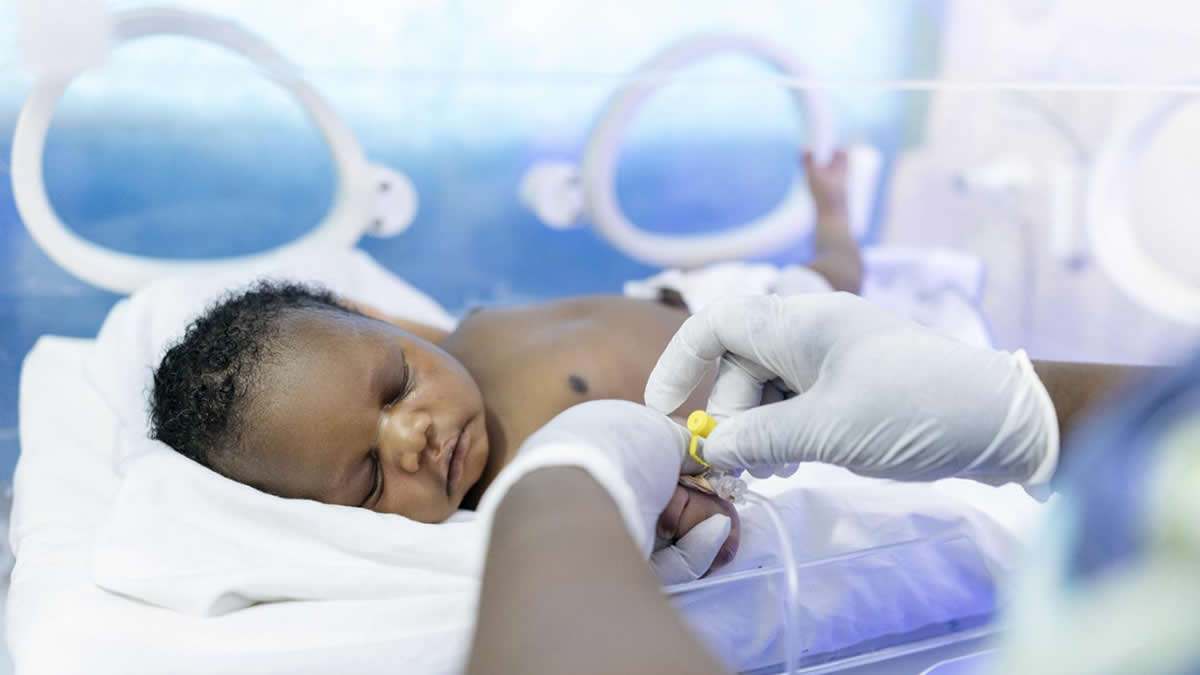
Some medical scientists and researchers have advised policymakers in the health sector to put premium on neonatal infection research to strengthen newborn care in Africa.
They said the continent could reduce to the barest minimum life-threatening infections in newborns through evidence-based research focusing on prevention, diagnosis, and treatment.
“Neonatal infection is a serious issue, which ought to be dealt with head on. In fact, it is a significant burden for our society, accounting for almost 30 per cent of all deaths in babies across Africa,” Professor John Amuasi, Lead of the SNIP-AFRICA Project in Ghana, told the Ghana News Agency in an interview on Thursday.
This was on the sidelines of the 2026 General Assembly Meeting of the Project, in Accra, which brought together researchers, clinicians, and health partners from 12 institutions across Africa and Europe.
SNIP-AFRICA (Severe Neonatal Infection Adaptive Platform Trials in Africa) is a multi-country research initiative working to improve the prevention, diagnosis, and treatment of life-threatening infections in newborns.
It is being funded by the European Union under Global Health EDCTP3 and coordinated by Fondazione Penta ETS (Italy), with the ambition to innovate research on severe childhood infections, particularly neonatal sepsis.
By using novel adaptive trial design elements, the Project seeks to generate evidence to improve antibiotic treatment of this deadly condition, thereby significantly enhancing the wellbeing of newborns and infants, who are at the highest risk of infection from difficult-to-treat bacteria.
The trial plans to enroll some 1,200 neonates in six neonatal intensive care units in Ghana, Kenya, South Africa and Uganda, to foster a culture of knowledge-sharing and collaboration.
Prof Amuasi, a global health expert, said Ghana played an important leadership role in the SNIP-AFRICA consortium through the Kumasi Centre for Collaborative Research in Tropical Medicine at the Kwame Nkrumah University of Science and Technology.
This year’s General Assembly aimed to review the progress of the Project’s work packages, share research findings, and identify sustainable structures that could continue supporting neonatal infection research.
The key areas of focus encompassed clinical and microbiological surveillance systems for neonatal infections, adaptive clinical trial platforms for evaluating treatments, as well as pharmacokinetics research to optimise drug dosing in newborns, he stated.
Additionally, the Project is providing the platform for capacity building and training for African researchers and healthcare workers, stakeholder engagement and policy integration, as well as legacy planning to ensure long-term impact.
Prof Amuasi said discussions and evidence generated at the meeting would contribute to shaping the future of neonatal infection research across the continent.
The project sought to strengthen research and clinical skills across participating countries and supporting the development of the next generation of African scientists working in neonatal infection research, he added.
Prof Julia Bielicki, the SNIP-Africa Scientific Coordinator, explained that the outcomes from the 2026 General Assembly were expected to improve how babies with severe infection in Africa were managed, focusing mainly on antibiotics use.
“If you have more restricted resources in terms of the care you can offer to babies, for example, if you cannot incubate and ventilate them very easily, then antibiotics treatment becomes sort of a cornerstone,” she noted.
Consequently, the Assembly shared research lessons on how to improve giving antibiotics to babies, using the right dose essentially, as well as activities relating to which antibiotics and treatments to be chosen, she explained.
The overall agenda is to identify new and better treatments for newborn sepsis, which is a leading cause of death in newborns in Africa.
“SNIP-AFRICA is a critical step in the fight against newborn sepsis, and we are confident that it will make a significant difference in the lives of newborns in Africa,” said Prof Bielicki, a Senior Researcher at the Centre for Neonatal and Paediatric Infection of St George’s University of London, United Kingdom.
Source: GNA
Related Posts