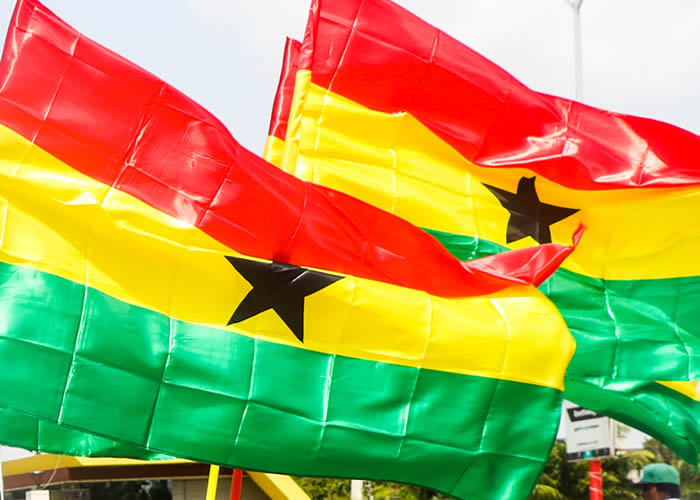
Ablakwa announces the evacuation of all Ghanaians from Israel who sought exit

Minister for Foreign Affairs, Samuel Okudzeto Ablakwa, has announced that all Ghanaians who requested evacuation from Israel have safely arrived in Accra, with only a limited number of consular officials remaining to provide essential services.
The minister confirmed that the evacuees arrived in Ghana a few hours earlier, describing the operation as successful amid rising regional tensions.
The development comes as the Middle East crisis enters its third week, raising concerns over the safety of foreign nationals and diaspora communities, while also triggering fears of broader economic disruptions, particularly to global energy and food supply chains linked to the Strait of Hormuz.
Ablakwa expressed appreciation to both Israeli and Egyptian authorities for their cooperation in facilitating the evacuation.
“I convey our appreciation to Israeli and Egyptian authorities for the cooperation. We warmly welcome our compatriots who arrived in Ghana a few hours ago. The Mahama administration will continue with safe evacuation efforts as we prioritise the welfare of all Ghanaians,” he stated.
The latest evacuation follows a series of precautionary measures taken by the government in response to escalating tensions across the region. Earlier this month, Ghana evacuated all staff from its embassy in Tehran and closed the mission indefinitely, relocating diplomats to Turkey.
In addition, Ghana’s mission in Doha has urged nationals to reconfirm their interest in a possible evacuation, amid heightened security concerns following regional military developments.
The evacuations come against the backdrop of intensified hostilities in the region, with increased military activity and retaliatory threats heightening uncertainty. The situation has prompted several countries to review the safety of their citizens and diplomatic staff across affected areas.
Recent days have seen intensified missile attacks on Tel Aviv and surrounding districts, with multiple impact points recorded across central Israel. Emergency services reported damage to residential buildings, while at least two civilians were killed in earlier strikes in the Tel Aviv metropolitan area.
Authorities say several missiles, including those carrying cluster munitions, have penetrated air defence systems, underscoring the growing complexity of the threat and the limitations of interception capabilities.
The escalation follows a pattern of sustained Iranian retaliation since the conflict intensified in late February. Israeli officials confirm that missile barrages have targeted urban centres and infrastructure, with previous strikes killing civilians and injuring dozens in areas such as Ramat Gan and other cities near Tel Aviv. The use of cluster warheads, designed to disperse multiple explosive submunitions, has heightened concerns over civilian safety due to their wide-area impact and unexploded remnants.
The latest wave of attacks is widely seen as part of Iran’s response to the killing of senior officials, including Ali Larijani, in Israeli airstrikes in Tehran. Iranian authorities have vowed retaliation, with missile strikes on Israel framed as retribution for the targeted assassinations.
The killing of Larijani, one of Iran’s most influential political and security figures, marks a significant escalation, triggering a cycle of reprisals and deepening the risk of a broader regional conflict, with mounting casualties and rising global economic implications.
Source: Diplomatic Times
Related Posts